
AfREN Virtual Symposium Recap — Saturday, 1 August 2026
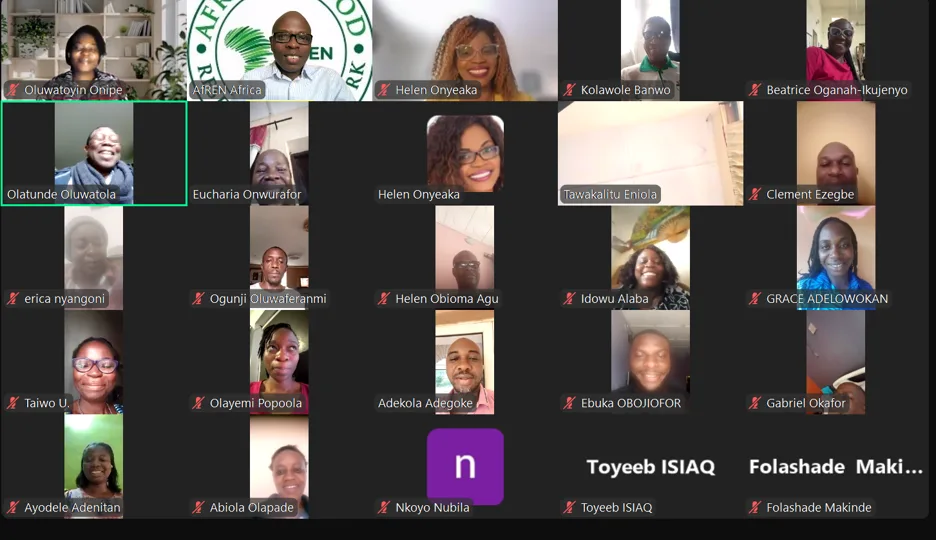
Palm oil adulteration in Sub-Saharan Africa is not a new challenge — but are we any closer to a lasting solution? That was the question at the heart of the African Food Research Network’s (AfREN) latest virtual symposium, which brought together a diverse “Gown-Town” audience of students, researchers, palm oil producers and traders, consumers, regulators, policymakers, quality assurance professionals, public health practitioners, and technology innovators from across Africa and beyond.
Moderated by Oluwatoyin Onipe (Ph.D) and led by Professor Helen Onyeaka, FIFST, SFHEA, the session offered a comprehensive look at one of the continent’s most persistent food safety concerns and the emerging tools that could finally help resolve it.
Setting the Stage
The discussion opened with three foundational questions designed to ground participants in the scope of the problem:
- Why should we care about palm oil adulteration?
- What exactly does “adulteration” mean in this context?
- Why has this problem proven so difficult to eliminate?
These questions framed palm oil not just as a commodity, but as a public health and trust issue that touches households, markets, and Africa’s standing in global trade.
An Interactive Discussion
Rather than a one-directional presentation, the symposium engaged participants directly. Attendees were posed a practical scenario: “If you were a food inspector with limited resources, how would you determine whether a palm oil sample was genuine?” The range of responses underscored just how constrained; and how creative frontline food safety work must be in resource-limited settings.
A key insight surfaced early in the discussion: the intensity of the adulteration menace varies significantly across different parts of Africa. This is not a uniform crisis, and effective solutions will need to reflect that regional diversity rather than apply a single blanket approach.
Exploring the Path to Sustainable Solutions
The heart of the symposium examined a range of technologies and approaches that could offer a sustainable path forward for Africa:
Artificial Intelligence — Can AI reliably recognize adulterated palm oil from a simple image, opening the door to low-cost, accessible detection tools?
Smartphones — Could every market inspector eventually carry a palm oil testing laboratory in their phone, bridging the gap between lab-grade accuracy and field-level accessibility?
Blockchain — Does blockchain genuinely solve adulteration, or does it primarily improve documentation and traceability — and is that distinction important?
Internet of Things (IoT) — What role could connected sensors play in continuously monitoring palm oil quality across production and distribution points?
Digital Twins — Could a digital twin of Africa’s entire palm oil supply chain help predict and pinpoint exactly where adulteration is most likely to occur — before it reaches the consumer?
Participants also examined where in the supply chain adulteration is most likely to happen, reinforcing that effective solutions must target specific vulnerability points rather than treat the entire chain uniformly.
A Challenge for the Future
The symposium closed with a forward-looking challenge to participants and to society at large:
“Imagine we are designing Africa’s Palm Oil Authenticity System for 2035. What would it include?”
This closing question shifted the conversation from diagnosis to design — inviting the audience to envision what a truly African-built, technology-enabled solution could look like a decade from now.
What’s Next
AfREN remains committed to moving beyond dialogue and into action. The insights and ideas generated during this symposium will inform a concrete, actionable project, which AfREN will announce in due course.
We invite anyone who identifies with our mission of safeguarding the safety and integrity of Africa’s food systems to join us.
Learn more and get involved: www.afrenet.org

afrennetwork