
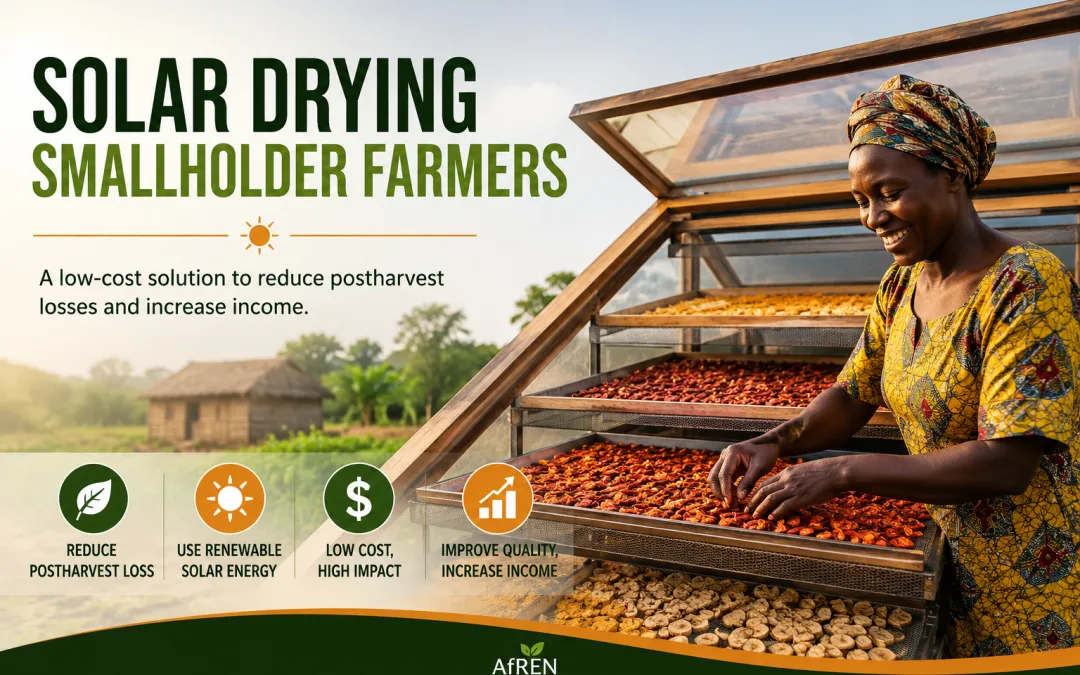
Solar drying smallholder farmers rely on has become one of the most practical tools for cutting postharvest losses without heavy investment. Across many regions, a large share of harvested fruits, vegetables, and grains spoils before ever reaching a market or a family’s table. This guide explains why solar drying matters and how to get started.
Why Solar Drying Smallholder Farmers Use Matters So Much
Postharvest loss remains one of agriculture’s most persistent problems. Studies consistently show that a significant portion of harvested crops in developing regions never reaches consumers, lost to mold, pests, and moisture damage before proper preservation methods can be applied in time.
For smallholder farmers, this loss is not just wasted food; it is wasted labor, water, and income. A household that spends months tending a crop only to watch a third of it rot has effectively worked for free during that portion of the season, with nothing to show for the effort.
The problem is often worst for perishable crops like tomatoes, mangoes, and leafy greens, which can spoil within days of harvest under warm conditions. Without access to cold storage, farmers frequently sell at rock-bottom prices during peak harvest simply to avoid total loss of unsold produce.
This creates a frustrating cycle where farmers earn the least during the season of highest supply, then have little to sell during leaner months when prices rise. Solar drying smallholder farmers use effectively breaks this cycle by letting produce be preserved and sold when prices are more favorable.
Solar drying offers a straightforward solution that does not require electricity, fuel, or expensive machinery. By harnessing sunlight to remove moisture from produce, farmers can extend shelf life dramatically, sometimes turning a highly perishable crop into a product that lasts many months without refrigeration.
This matters even more in areas with unreliable power grids or limited access to cold storage. Where refrigeration is impractical or unaffordable, solar drying smallholder farmers depend on becomes the most realistic pathway to preserving a harvest long enough to sell it at a better price.
How Solar Food Dehydration Actually Works
Solar food dehydration relies on a simple principle: moving warm air across produce to evaporate water content while protecting the food from insects, dust, and rain. Most designs use a dark absorber surface to capture heat and a ventilation system to keep air circulating steadily.
There are two broad categories of solar dryers commonly used by smallholders. Direct dryers expose produce straight to sunlight under a transparent cover, while indirect dryers heat air separately before passing it over the food, better preserving color and nutrients in delicate items.
Indirect solar food dehydration tends to produce higher-quality results for items like leafy vegetables, herbs, and fruits prone to discoloration. Direct dryers, meanwhile, are simpler and cheaper to build, making them a popular first step for farmers testing the technology on a small scale.
Drying times vary by crop, humidity, and dryer design, but most fruits and vegetables reach safe moisture levels within one to three days of consistent sunlight. Farmers typically test dryness by feel, checking that produce is firm and pliable rather than brittle or sticky.
Ventilation design plays a bigger role in outcome quality than most first-time builders expect. Dryers with poor airflow trap humid air near the produce, slowing evaporation and increasing the risk of mold forming before the food reaches a safe moisture level.
Temperature control also matters more than many assume. Excessive heat can case-harden produce, sealing moisture inside a dry outer layer while the interior remains wet. Solar drying smallholder farmers succeed with usually involves moderate, steady heat rather than the highest possible temperature.
Low-Cost Food Preservation Africa Farmers Can Build Themselves
Low-cost food preservation Africa farmers have adopted often starts with simple, locally sourced materials rather than imported equipment. Wooden frames, mesh screening, and clear plastic sheeting can build a functional solar dryer for a fraction of the cost of mechanical alternatives.
Community workshops run by agricultural extension services and nonprofit organizations have helped spread these low-cost food preservation Africa techniques to thousands of households. Many programs teach farmers to build dryers using scrap materials already available on the farm, keeping upfront costs minimal.
Cost is often the deciding factor for smallholders considering new technology. A basic solar dryer can be built for a small fraction of the price of an electric dehydrator, making it accessible even to households with very limited cash reserves for equipment purchases.
Beyond construction cost, solar dryers require no ongoing fuel or electricity expense, which matters enormously for farmers operating on thin margins. Once built, the only ongoing costs are minor repairs and occasional replacement of screening or plastic covering materials.
Postharvest Technology That Fits Smallholder Realities
Postharvest technology designed for large commercial operations often does not translate well to smallholder contexts, where budgets, infrastructure, and labor availability differ substantially. Solar drying stands out because it scales down easily without losing effectiveness at a smaller production level.
Unlike many postharvest technology solutions that require trained technicians or specialized parts, solar dryers can be repaired using basic carpentry skills and materials found in most rural markets. This accessibility keeps the technology functioning even when formal technical support is unavailable.
Solar drying smallholder farmers use also integrates well with existing labor patterns. Produce can be loaded in the morning and monitored throughout the day using tasks farmers already perform, rather than requiring dedicated staff or disrupting other essential farm activities.
Researchers continue refining postharvest technology to improve drying consistency and reduce contamination risk. Newer solar dryer designs incorporate better airflow management and pest screening, addressing some of the quality concerns that limited earlier, simpler models.
Practical Benefits Beyond Reduced Waste
Reducing spoilage is only part of the value solar drying provides. Dried produce is lighter and more compact than fresh produce, cutting transportation costs significantly when farmers need to move goods to distant markets or storage facilities.
Dried products also command different pricing dynamics than fresh produce. Farmers can sell dried fruits, vegetables, and herbs during off-season months when fresh supply is scarce, often earning better prices than they would during the harvest glut when markets are flooded.
Nutritionally, properly dried produce retains much of its original vitamin and mineral content, particularly when indirect drying methods protect food from direct sun exposure. This makes solar-dried foods a valuable addition to household diets during lean months between harvests.
Solar drying also creates opportunities for small-scale value-added businesses. Farmers who dry and package produce attractively can sell into higher-value markets, including urban retailers and export buyers seeking dried fruits, vegetables, and herbs from rural producing regions.
Women, who often manage postharvest handling in many farming households, frequently benefit most directly from adopting the technology. Solar drying smallholder farmers rely on can reduce the daily labor burden of processing perishable crops while opening new income streams that women can manage independently.
Households also gain a buffer against unpredictable growing seasons. Dried produce stored properly can supplement family meals during droughts, floods, or other disruptions that reduce fresh harvests, improving overall food security beyond what fresh produce alone could provide.
Getting Started: Practical Steps for Solar Drying Smallholder Farmers
Farmers interested in adopting solar drying should start small, building a basic direct dryer to test the process on a modest volume of produce. This lets households learn drying times and quality expectations before committing to a larger, more permanent structure.
Choosing the right crops matters. High-moisture fruits like mangoes, tomatoes, and bananas benefit enormously from drying, while leafy vegetables and herbs dry quickly and retain good value. Farmers should prioritize crops that already face high spoilage rates in their specific region.
Proper hygiene during drying prevents contamination. Produce should be washed, sliced evenly, and placed on clean surfaces before drying begins. Covering dryers with fine mesh keeps insects and dust away, protecting both food safety and the final product’s market value.
Storage after drying is equally important. Dried produce should be cooled completely before packaging in airtight containers, away from moisture and direct sunlight. Poor storage can undo the benefits of careful drying, allowing moisture reabsorption and spoilage to occur.
Challenges Farmers Should Anticipate
Weather remains the biggest limitation of solar drying. Extended cloudy or rainy periods slow drying considerably, sometimes forcing farmers to pause processing or supplement with covered indoor drying racks until sunnier conditions return.
Quality control can also be inconsistent, especially with simple direct dryers exposed to variable temperatures and dust. Farmers new to the technique often need a season or two of practice before achieving consistently high-quality dried products that meet buyer expectations.
Market access presents another hurdle. Even well-dried produce needs buyers willing to pay fair prices, so farmers benefit from connecting with cooperatives, local processors, or extension programs that can help identify markets for dried goods before scaling up production.
Labor availability can also limit how much a household can process at once. Slicing, arranging, and monitoring produce takes time, and families juggling other farm tasks may need to stagger drying batches rather than processing an entire harvest simultaneously.
Scaling beyond household use introduces additional complexity, including food safety certification and packaging standards required for formal retail markets. Farmers interested in commercial-scale drying should seek guidance from agricultural extension officers before investing in larger equipment or facilities.
Looking Ahead for Smallholder Solar Drying
Interest in solar drying continues growing as governments and development organizations recognize its potential to cut postharvest losses affordably. Several agricultural programs across the continent now include solar dryer construction as a core component of farmer training curricula.
Improved designs incorporating better insulation, more efficient airflow, and simple monitoring tools are making their way to rural communities through partnerships between universities, nonprofits, and local manufacturers. These improvements should make the technology more reliable over time.
As climate variability increases pressure on food security, technologies like solar drying that reduce waste without heavy resource demands are likely to receive continued attention. Farmers who adopt these methods now may be better positioned as conditions and market expectations evolve.
Financing models are also beginning to shift in favor of smallholders. Some microfinance institutions and agricultural cooperatives now offer small loans specifically for building improved solar dryers, recognizing the technology’s strong return on investment relative to its modest upfront cost.
Researchers and extension services continue documenting best practices from farmers already using the technology successfully. Sharing these lessons through farmer field schools and community demonstrations helps new adopters avoid common mistakes and reach reliable results faster than learning entirely through trial and error.
Conclusion
Solar drying smallholder farmers adopt offers a rare combination of affordability, simplicity, and meaningful impact on household income and food security. It requires no electricity, minimal upfront investment, and skills that most rural households can learn quickly with basic guidance and practice.
For farmers looking to reduce waste, improve nutrition, and access better markets during off-season months, solar drying remains one of the most practical postharvest solutions available today, offering a genuine path toward greater resilience and steadier income

afrennetwork